This is an excellent example of a Annularia Sphenophylloides plant fossil plate. These extinct, flower-like plants lived during the Carboniferous period (approx. 299 to 359 million years ago). These perfect little structures look like candy "starlight" mints. This specimen was recovered from a deposit in Oklahoma USA. It weighs 4.6 grams and measures approx. 35x25mm at it's widest points. These fossils are not very rare, but specimens with this complete and undamaged structure are.
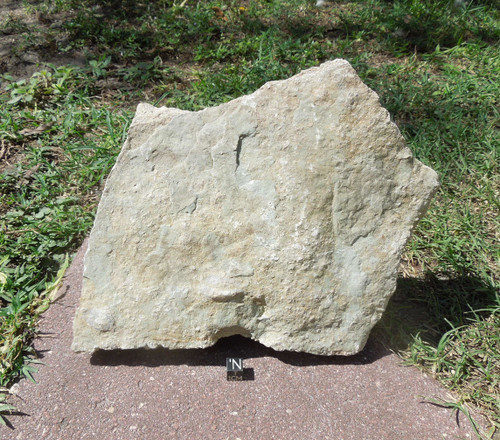
Refer to the photos. The black centimeter cube is shown for scale and is not included. You are purchasing the specimen shown. Your purchase will include an ID label.
Annularia sphenophylloides is the foliage (leaf whorls) of the extinct Calamites, an arborescent (tree-like) horsetail that flourished in Carboniferous coal swamps. The plant bore leaves in distinct whorls around the stem nodes. In A. sphenophylloides, the leaves are typically narrower at the base and broader at the tip, and are arranged in whorls of 10-20. They measure about 5-15 mm long and are relatively short compared to other Annularia species.
The whorls often show a star-shaped or wheel-like appearance in compression fossils, which made them distinctive. The venation is simple, consisting of a single prominent midvein running from base to tip.